
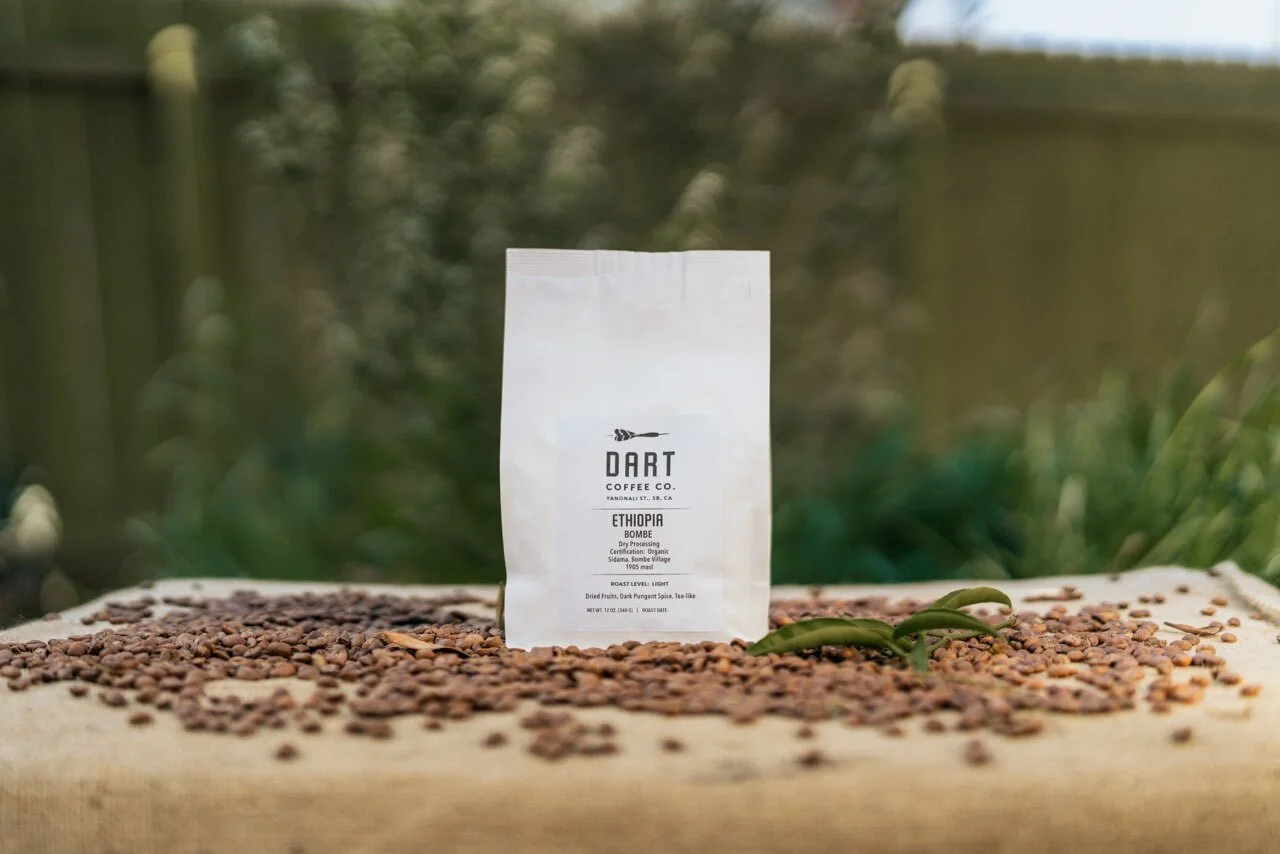
ETHIOPIA BISHAN WATE GUJI GR 1 SPECIAL PREP

ETHIOPIA BISHAN WATE GUJI GR 1 SPECIAL PREP
Processing: Washed
Variety: Ethiopian Heirloom Varieties
Region: Guji, Yirgacheffe
Altitude: 2100-2300 masl
Year: 2025-26
Roast Level: Light
Tasting: Jasmine, Bergamot Tea, Meyer Lemon, Pear. A complex coffee with tart acidity and fruit-like sweetness. Roasted light to preserve the sweet fragrances.
12 oz.
Bishan Wate
The Bishan Wate Washing Station is located in Guji near the Wate River. Around 50 farmers contribute cherry. Coffee cherries are picked when well-ripe and sent straight to be processed. First, the cherries are floated in cool, clean water to sort out any flaws. Next, they are washed, depulped, and then undergo a 48-hour fermentation. Finally, they are moved to dry on raised beds that are positioned for maximum wind exposure and minimal direct sunlight. The coffee dries for 21 days or until the moisture content reaches 12%.
Washed Special Prep
With the special prep (what the producers generally call “Premium” in Ethiopia) the cherries are collected from a limited number of small-holder farmers.
90% of the cherries are perfectly picked, the right red color. 5% semi red and 5% overripe.
All of it is processed and stored it separately from the other lots. They generally produce a very small number of bags in this way every year.
In most instances, cherries used to produce these lots are collected from a day lot (picked in one day).
The process of producing Washed coffees in Ethiopia will vary slightly from washing station to washing station, but generally speaking the coffee is picked ripe and depulped the same day. There is usually a fermentation period of 8–12 hours in open-air tanks, then washed in water channels to remove the mucilage. The coffee seeds will be spread on raised beds to dry for 5–15 days, depending on the weather.
Guji
Guji is a beautifully forested area in southern Ethiopia. Before the early 2000's, this region was considered part of Sidama, but has since become its own region. The people of Guji grow coffee gardens at very high altitudes in the rich red soil of the highlands, setting this coffee's profile apart from neighboring regions. These smallholders deliver their coffee to washing stations to be sorted and processed together, developing flavors of fruits, deep chocolate, and light florals.
Ethiopia
Among coffee-producing countries, Ethiopia holds near-legendary status not only because it’s the “birthplace” of Arabica coffee, but also because it is simply unlike every other place in the coffee world. Unlike the vast majority of coffee-growing countries, the plant was not introduced as a cash crop through colonization. Instead, growing, processing, and drinking coffee is part of the everyday way of life, and has been for centuries since the trees were discovered growing wild in forests and eventually cultivated for household use and commercial sale.
The majority of Ethiopia’s farmers are smallholders and sustenance farmers, with less than 1 hectare of land apiece. In many cases, it is almost more accurate to describe these farms as “coffee gardens” as the trees do sometimes grow in more of a garden or forest environment than what we imagine fields of farmland to look like. There are some large privately owned estates, as well as co-operative societies comprising a mix of small and more mid-size farms, but the average producer here grows relatively very little for commercial sale.
Typically farmers in this region don't have access to and therefore do not utilize fertilizers or pesticides in the production of coffee.
Courtesy of Cafe Imports, USA
Quisque iaculis facilisis lacinia. Mauris euismod pellentesque tellus sit amet mollis.