
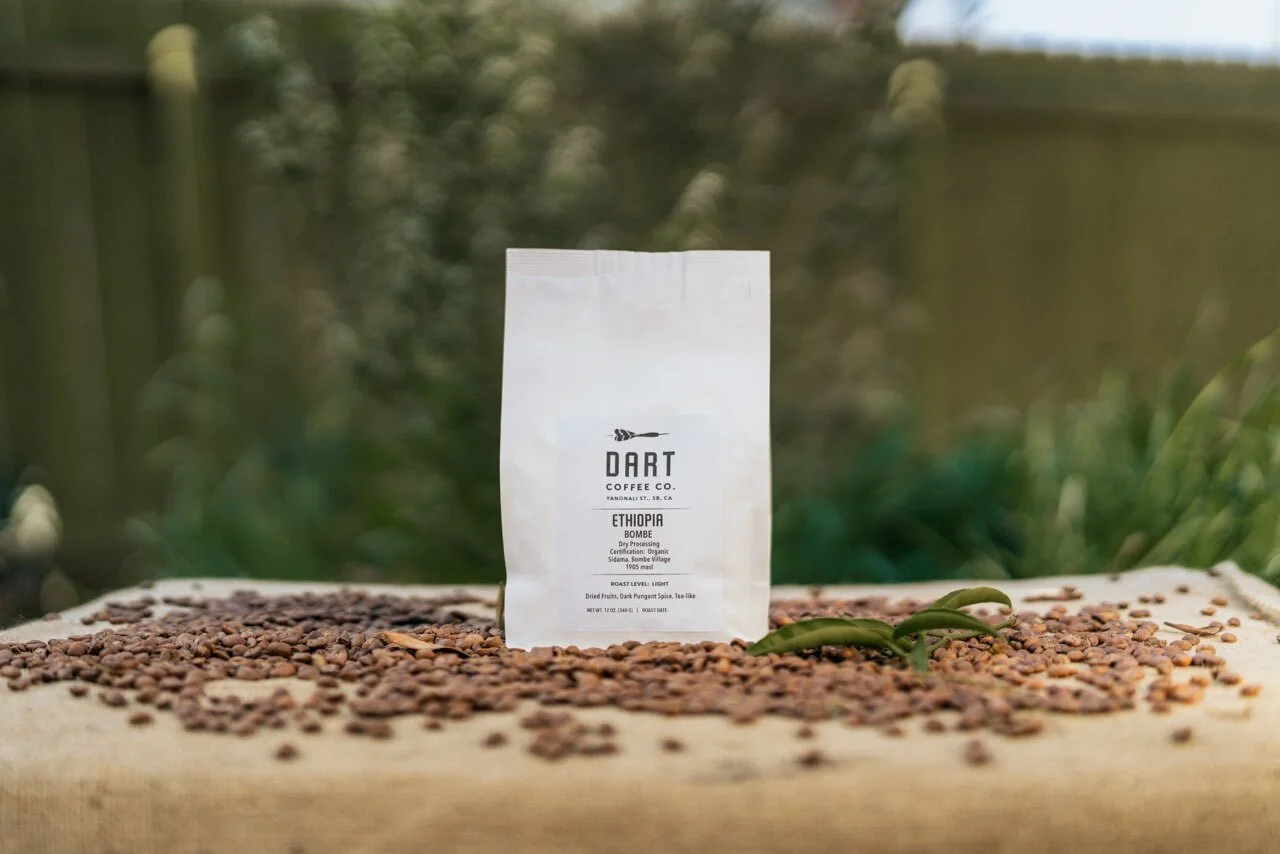
PERU EL GRAN MIRADOR

PERU EL GRAN MIRADOR
CERTIFICATIONS: ORGANIC, FAIR-TRADE
PROCESSING: WASHED
REGION: CHIRINOS, CAJAMARCA, PERU
VARIETAL: CATIMOR, CATURRA, BOURGON AND TYPICA
ALTITUDE: 1750 MASL
ROAST LEVEL: MEDIUM
TASTING: CHOCOLATE, PEANUT BUTTER, OOLONG TEA AND RED APPLE. MILD ACIDITY AND SYRUPY SWEETNESS. OMNI-ROAST, EXCELLENT FOR ESPRESSO, DRIP, COLD BREW.
12 oz.
Asociacion El Gran Mirador
Asociación El Gran Mirador (“The Grand Lookout”) was founded in 2021 and today has around 30 contributing farms from the Chirinos area. The community around Chirinos is one with a strong history of coffee production and a commitment among its producers to quality and sustainability. This region has natural conditions ideal for growing coffee that allow producers to bring high-value coffee to the market.
All of the association's contributing farms enjoy high elevation, fertile soils, and ideal weather for growing high-quality specialty coffee. The association also promotes sustainable and responsible management of natural resources. Their systems are primarily based on agroforestry models.
Coffee from their members' farms is selectively picked by hand and fermented for 18 hours. From there, the coffee is dried slowly in a controlled environment.
The social well-being of the association's producer members is a fundamental pillar of their management. Within this framework, they promote initiatives aimed at improving the quality of life of their producers and the communities in which they operate. As part of this commitment, they have opened a pharmacy and a minimarket at their collection center, located in the district of Chirinos, facilitating access to medicines and necessities at affordable prices for their members. They are also about to open a new pharmacy in the city of San Ignacio, where they also have a collection center that directly benefits our producers. Similarly, their institutional plan includes the implementation of a polyclinic, with the goal of providing comprehensive, high-quality health services, primarily aimed at their producer members and their families.
The vast majority of coffee in Perú is Washed, and many producers own their own wet-milling equipment, though smallholders may also deliver cherry to a central processing unit or cooperative for processing. The coffees are usually depulped the same day they are harvested and given a 12–18-hour open-air fermentation before being washed clean of mucilage. (The fermentation time may be longer in cooler areas at higher elevations.) Drying styles vary in Perú, and coffee may be dried on patios, raised beds, in parabolic dryers, or mechanically.
Cajamarca
Cajamarca is a semi-dry, semi-cold, tropical region in the northeastern highlands of Peru with very fertile soil at high Andean mountain elevations. All of these factors contribute to the potential of specialty coffee production in the area, which is growing. It is known as the main coffee-producing region of Peru, accounting for around 25% of national production. Smallholder producers farm on 2-3 hectares of land, many of whom practice organic farming. Most farmers in the area work independently, but the recent increase in cooperatives has been effective in increasing the quality of coffees produced in the area.
Peru
Though coffee arrived in Peru relatively early—in the middle of the 1700s—it wasn’t cultivated for commercial export until nearly the 20th century as demand from Europe rose due to a significant decrease in coffee production in Indonesia. British presence and influence in the country helped increase and drive exports. In the early 1900s, the British government took ownership of roughly 2 million hectares of land from the Peruvian government as payment on a defaulted loan, and much of that land became British-owned coffee plantations.
As in many Central and South American countries, the large European-owned landholdings were sold or redistributed throughout the 20th century. Farms became smaller and more fragmented, offering independence to farmers but also limiting their access to resources and a larger commercial market. Unlike many other countries whose coffee economy is dominated by smallholders, Peru lacks the organization or infrastructure to provide economic or technical support to farmers—a hole that outside organizations and certifications have sought to fill. The country has a remarkable number of certified-organic coffees, as well as Fair Trade, Rainforest Alliance, and UTZ-certified coffees. Around 30 percent of the country’s smallholders are members of democratic co-ops, which has increased the visibility of coffees from the area but has done little to bring incredibly high-quality lots into the spotlight.
As of the 2010s, Peru is one of the top producers of Arabica coffee, often ranked fifth in world production and export of Arabica. The remoteness of the coffee farms and the incredibly small size of the average farm have prevented much of the single-farm differentiation that has allowed for microlot development and marketing in other growing regions, but as with everything else in specialty coffee, this is changing quickly as well. The country’s lush highlands and good heirloom varieties offer the potential for growers to beat the obstacles of limited infrastructure and market access, and as production increases, we are more likely to see those types of advancements.
FTO Peru
Around 90,000 hectares of coffee farmland in Peru is certified organic, and it is one of the places with the highest percentage of certified-organic exported coffee in the world. It is estimated that 25–30% of the smallholder farmers in Peru are members of democratically organized cooperatives and associations, making it easy to source FTO-certified lots.
Peru is a shining example of progress and development through relationships. In 2014, we met Rony Lavan, a cupper at a cooperative in the Cajamarca region of Peru. After spending some quality time working alongside him, we started talking about how we could do smaller, higher quality, and more traceable offerings together. Today, we have been working with Rony, now-owner of his own company, Lima Coffees located in Jaen, Peru. We have been sourcing and developing the vast majority of our Peruvian coffees alongside the team at Lima Coffees since 2017, historically spending time in Jaen cupping and approving coffees while visiting farms and connecting with the many fantastic producers that Lima Coffees represents.
Courtesy: Cafe Imports, USA
Quisque iaculis facilisis lacinia. Mauris euismod pellentesque tellus sit amet mollis.